Average Reviews:

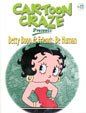
(More customer reviews)Fleischer Studios made the Betty Boop cartoons from 1932-1939, with Mae Questel (who was also Olive Oyl, Little Audrey, and Little Lulu) primarily as Betty's voice. All the episodes in this collection were directed by Dave Fleischer, and he appears in a clever part-live action sequence along with brother and producer Max in "Rise to Fame", and Max is also in "More Pep." The DVD finishes off with 2 more mid '30s entries from the Fleischer Studios. The Betty Boop episodes are in b&w, and the last 2 are Color Classics. Condition of the prints is good considering their age. Total running time is 67 minutes.
Episode list:
1: "Betty Boop's Rise to Fame," 1934, no animation credits given. This is a fabulous cartoon, with live action sequences featuring Max and Dave Fleischer, and includes clips from previous cartoons, "Stopping the Show," "Betty Boop's Bamboo Isle," and "Old Man of the Mountains." Betty imitates Maurice Chevalier and Fanny Brice. 5*
2: "Betty Boop's Crazy Inventions," 1933, animated by Willard Bowsky and Ugo D'Orsi. Songs include "Keep a Little Song Handy" by Sammy Timberg. Betty works in a trade show full of bizarre inventions, with Bimbo the dog and Ko Ko the clown assisting. 5*
3: "Be Human," 1936, animated by Myron Waldman and Lillian Friedman. The horrible farmer beats his animals (dreadful animal cruelty is depicted) so Betty calls Grampy at the Animal Aid Society, and the farmer gets a taste of his own medicine. 5*
4: "Ker-Choo," 1933, animated by Seymour Kneitel and Bernard Wolf. Songs include "I've Got a Cold in My Nose." Betty is a race car driver, and wins despite her sniffles. 5*
5: "More Pep," 1936, animated by Thomas Johnson, David Hoffman, Harold Walker, and Otto Feuer. The 2nd episode that features live-action and Max Fleischer, who draws Pudgy the dog, and asks Betty to energize him. 5*
6: "No! No! A Thousand Times No!," 1935, animated by Myron Waldman and Ed Nolan. Betty spurns the Villain and is saved by her sweetheart Fred in this melodramatic episode. 5*
7: "Betty Boop with Henry (the Funniest Living American)," 1935, animated by Sam Stimson and Myron Waldman. Henry was a comic strip character created by Carl Anderson, and this was his only screen appearance. Songs include "Everyone Ought to Have a Pet." Betty owns a pet shop, and asks Henry to look after it for her, creating some chaos. 4*
8: "Is My Palm Read," 1933, animated by Dave Tendlar and William Henning. Betty goes to see a psychic (Bimbo), and they are pursued by ghosts. The naked bathtub scene, often edited, is not in this print. 5*
9: "Somewhere in Dreamland," 1936, animated by Seymour Kneitel and Roland Crandall, music by Murray Mencher and Charles Newman. The sad, sweet tale of a brother and sister, hungry and ragged, who dream of new clothes and sweets. 5*
10: "The Kids in the Shoe," 1935, animated by Seymour Kneitel and Roland Crandall. Unruly kids are a handful for the woman living in a shoe. The final song, "Mama Don't Allow No Music Around Here," is marvelous. 4*
Click Here to see more reviews about: Cartoon Craze Vol 11, Betty Boop: Be Human
1. Betty Boop's Rise To Fame 2. Betty Boop's Crazy Inventions 3. Be Human 4. Betty Boop's Ker-Choo 5. More Pep 6. No! No! A Thousand Times No! 7. Betty Boop With Henry 8. Is My Palm Read 9. Somewhere In Dreamland 10. The Kids In The Shoe

Click here for more information about Cartoon Craze Vol 11, Betty Boop: Be Human

0 comments:
Post a Comment